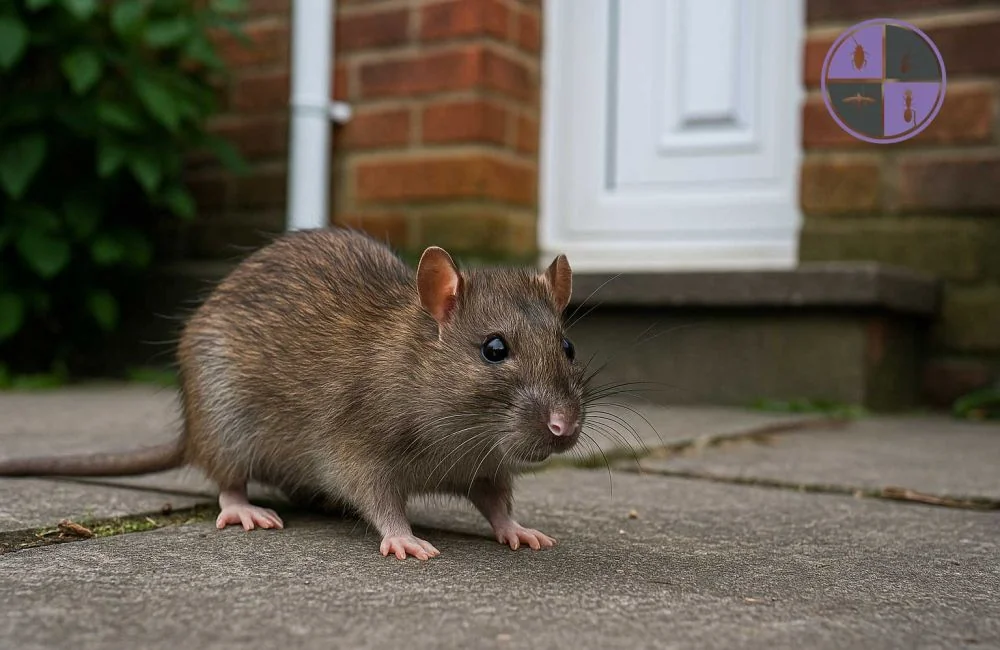
The UK's Growing Rat Problem
Most people think of rats as a nuisance that turns up in
bins or basements. But across the UK, they've become something far more costly:
a real threat to broadband infrastructure, capable of knocking out entire towns
and even sinking a telecoms company.
The Problem Is Bigger Than You Think
In January 2026, London provider G.Network collapsed into
administration under roughly £300 million of debt. A rescue deal from rival
Community Fibre fell through, and rat damage was a big part of why. Community
Fibre's chief executive, Graeme Oxby, said rodents are drawn to ducts and find
fibre genuinely tasty, and that fixing the damage would have been too costly to
justify the deal. Things were made worse by G.Network laying much of its
cabling under busy roads rather than pavements, meaning repairs meant digging
up the street.
It's not an isolated case. In 2023, the Hertfordshire town
of Tring lost its telecoms after nesting rats chewed through cabling so
thoroughly that engineers needed drills to get through the casing. Around 100
households in Askern, near Doncaster, lost their internet last month after a
rat got into the lines. And in Norfolk, provider County Broadband had to
reconnect hundreds of customers after what it called an unusually persistent
rodent chewed through both the main and backup fibre serving the area.
Why Is This Happening?
Rats gnaw constantly because their teeth never stop growing,
and cable ducts give them exactly the resistance they're looking for. The
fibres inside are soft enough to double as nesting material, and ducts offer
the warm, sheltered space rats seek out.
The shift to full fibre is making this worse, simply because
more of this appealing material is going into the ground. Some providers have
also switched to biodegradable, soy or corn based cable jackets to cut plastic
waste, which turns out to be even more attractive to rats than standard casing.
Scale doesn't help either. Openreach alone maintains a
network covering tens of millions of premises, and keeping rats out of shared
ducting at that scale is genuinely difficult. A single chewed cable that once
might have knocked out a street can now take down hundreds of properties, or
help sink a company.
A Smarter Way to Protect the Network
This is the problem CTech Corporation built Rodrepel™ to
solve. It's a low toxicity, environmentally friendly rodent aversive that gets
built into cables, sheathing, and conduit so the material becomes unappealing
to rodents before any damage happens.
Rather than reacting after a cable's already been chewed
through, Rodrepel™ works on contact, teaching the animal to avoid the treated
surface. That avoidance tends to stick with individual rodents and spread
through a colony, so the deterrent builds over time instead of fading.
It comes in a few formats: a solid masterbatch built into
cable during manufacturing, a lacquer for cables already in the ground, and a
liquid concentrate for coating substations and junction boxes. It's compliant
with ROHS, ROHS2, REACH, ISO, APVMA, NEA and EU BPR, and is FIFRA exempted.
A rat helped sink a £300 million broadband company. The
question for operators isn't whether rodents are a serious risk anymore, it's
what they're doing about it before the next outage.
Get in touch at technical.marketing@ctechcorporation.com to
find out how Rodrepel™ can be built into your infrastructure protection
strategy.
Visit us at: www.ctechcorporation.com | www.rodrepel.com |
www.combirepel.com