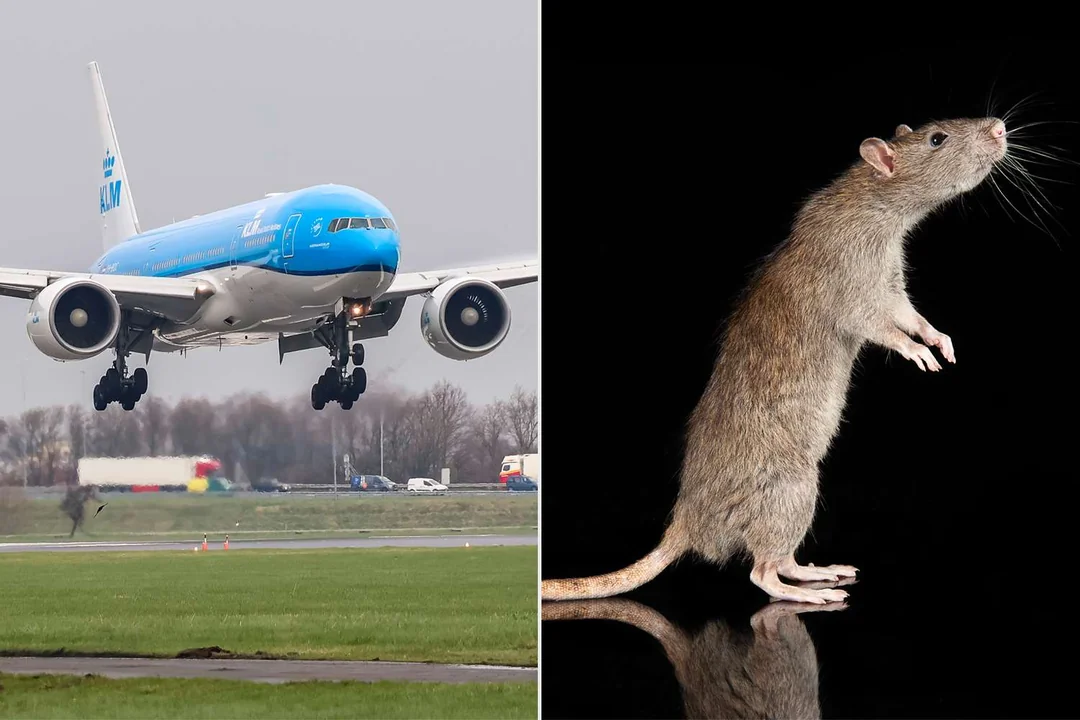
When Rats Take Flight: Aviation's Unlikely Rodent Problem
Most people don't think twice about pest control when
boarding a plane. But rodents have proven, repeatedly, that they don't need an
invitation to fly.
Two Recent Incidents
In one widely reported case, a JetBlue passenger in the
airline's Mint cabin filmed what appeared to be a rat crawling through panels
above the overhead bins mid-flight. The footage prompted a public apology from
JetBlue. Beyond the obvious hygiene concerns, rodents loose in a cabin pose a
real maintenance risk, since they are known to chew through wiring once they
gain access to the spaces behind panels.
In a more disruptive incident, an SAS Airbus A320neo flying
from Stockholm to Malaga was forced into a complete U-turn after a mouse was
spotted onboard mid-flight, landing back at its departure airport more than
three hours after taking off. Passengers were transferred to a different
aircraft to complete their journey, while the original plane was pulled for
inspection.
Why a Single Rodent Can Ground a Plane
The risk here is serious. Aircraft wiring bundles run
through narrow gaps that are difficult to inspect without significant
disassembly. A rodent loose onboard can sever this wiring, potentially causing
instrument failures or electrical issues, and in rare cases, fire. In the SAS
incident, the crew's decision to turn back was driven precisely by this risk.
Rodents also cause damage simply by existing onboard. Their
teeth grow continuously, compelling them to gnaw on hard surfaces, and their
urine is corrosive to aircraft metal. Once a rodent is confirmed onboard, the
aircraft is typically pulled from service while crews use tracking powder to
locate it and inspect wiring along its likely path, a process that can be
extensive and costly.
These incidents are far from isolated. Similar rodent
stowaway events have disrupted flights at other major carriers, and airports
already use air curtains and rubber door seals to keep pests out. Despite this,
rodents continue to find their way in, often through ground equipment or
jetways while planes are parked between flights.
A Smarter Layer of Protection
At CTech Corporation, we believe aviation, like the
automotive and infrastructure sectors before it, can benefit from a proactive
rather than reactive approach to rodent protection. Our product, Rodrepel™,
is an extremely low-toxicity, environment-friendly rodent aversive that makes
sensitive materials unattractive to rodents before damage occurs.
Rather than relying solely on traps or tracking powder after
the fact, Rodrepel™ triggers an instinctive aversion response in rodents on
contact, a deterrent effect that is retained and passed on to others over time.
Our solid masterbatch can be incorporated directly
into wiring insulation and cable sheathing during manufacturing, while our lacquer
can be applied to existing wiring and components during scheduled maintenance,
offering a transparent, durable protective layer.
The product is compliant with ROHS, ROHS2, REACH, ISO,
APVMA, NEA, EU BPR, and is FIFRA exempted.
A mouse shouldn't be able to turn a flight around.
Prevention built into the materials themselves is a far more reliable safeguard
than catching the problem after it has already taken hold.
Contact us at technical.marketing@ctechcorporation.com
to discuss how Rodrepel™ can support rodent-resistant design in demanding
environments.
Visit us at: www.ctechcorporation.com
| www.rodrepel.com | www.combirepel.com